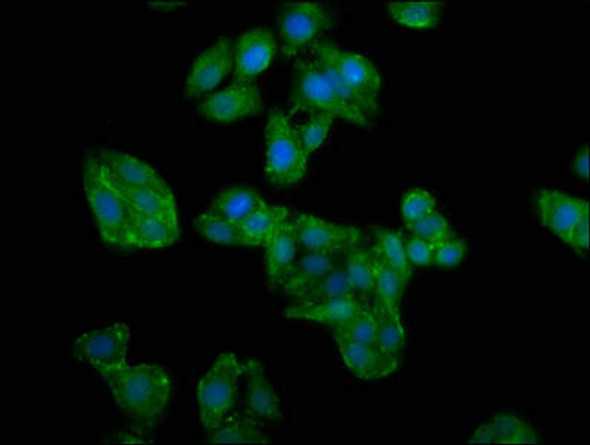
The PBX4 Polyclonal Antibody (PACO5400) is a valuable tool for researchers studying the PBX4 protein, a transcription factor involved in a variety of cellular processes. Raised in rabbits, this antibody demonstrates high reactivity with human samples and is validated for use in Western blot applications. It specifically binds to the PBX4 protein, allowing for accurate detection and analysis in different cell types.PBX4 is known to play a role in developmental processes, particularly in the formation of various organs and tissues. It also has implications in cancer research, as dysregulation of PBX4 expression has been associated with tumorigenesis.
By studying the function of PBX4, researchers can gain insights into its impact on cellular pathways and potentially identify new therapeutic targets for diseases related to its activity.In summary, the PBX4 Polyclonal Antibody is a reliable tool for investigating the functions of the PBX4 protein in both normal and disease states. Its use can aid in advancing our understanding of cellular biology and may lead to the development of novel treatment strategies for a range of conditions.
Antibody Name:
PBX4 Antibody (PACO05400)
Antibody SKU:
PACO05400
Size:
50ug
Host Species:
Rabbit
Tested Applications:
ELISA, IHC
Recommended Dilutions:
ELISA:1:20000, IHC:1:100-1:300
Species Reactivity:
Human
Immunogen:
Synthesized peptide derived from the Internal region of human Pbx 4.
Form:
Liquid
Storage Buffer:
Liquid in PBS containing 50% glycerol, 0.5% BSA and 0.02% sodium azide.
Purification Method:
The antibody was affinity-purified from rabbit antiserum by affinity-chromatography using epitope-specific immunogen.
Clonality:
Polyclonal
Isotype:
IgG
Conjugate:
Non-conjugated
Synonyms:
PBX4; Pre-B-cell leukemia transcription factor 4; Homeobox protein PBX4
UniProt Protein Function:
PBX4: a member of the pre-B cell leukemia transcription factor family. These proteins are homeobox proteins that play critical roles in embryonic development and cellular differentiation both as Hox cofactors and through Hox-independent pathways. The encoded protein contains a homeobox DNA-binding domain, but specific functions of the protein have not been determined. Alternatively spliced transcript variants have been observed for this gene. [provided by RefSeq, May 2011]Protein type: DNA-bindingChromosomal Location of Human Ortholog: 19p13.11Cellular Component: nucleus; XY bodyMolecular Function: DNA binding transcription factor activity; protein binding; sequence-specific DNA bindingBiological Process: positive regulation of transcription, DNA-templated; transcription from RNA polymerase II promoter