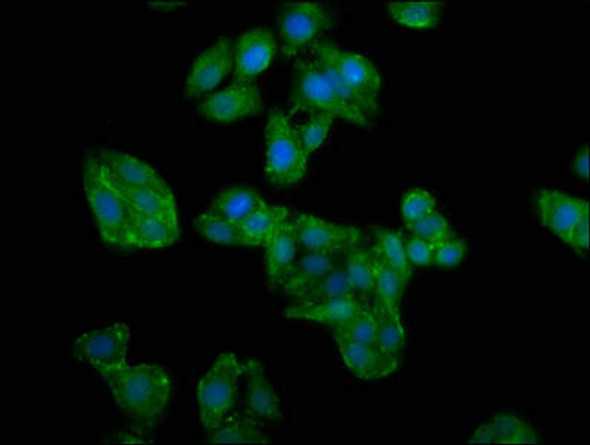
The PAGE3 Polyclonal Antibody (PACO03504) is a crucial tool for research involving PAGE3, a protein involved in regulating cell growth and differentiation. This antibody, generated in rabbits, has high reactivity with human samples and is validated for use in various applications, including Western blotting. By specifically binding to the PAGE3 protein, researchers can easily detect and analyze its expression in a variety of cell types, making it ideal for studies in cancer biology and developmental biology.PAGE3, also known as growth regulator and differentiation marker, plays a pivotal role in controlling cell proliferation and differentiation processes.
Its involvement in these fundamental cellular processes makes it a valuable target for studying cancer development and tissue regeneration. Understanding the function of PAGE3 is essential for developing targeted therapies that can manipulate cell growth and differentiation in disease contexts.Overall, the PAGE3 Polyclonal Antibody offers researchers a powerful tool for investigating the role of PAGE3 in cellular processes, making it a valuable asset for studies in cancer biology, developmental biology, and regenerative medicine.
Antibody Name:
PAGE3 Antibody
Antibody SKU:
PACO03504
Size:
50ug
Host Species:
Rabbit
Tested Applications:
ELISA, IHC
Recommended Dilutions:
IHC:1:100-1:300
Species Reactivity:
Human
Immunogen:
synthesized peptide derived from the Internal region of human PAGE-3.
Form:
Liquid
Storage Buffer:
Liquid in PBS containing 50% glycerol, 0.5% BSA and 0.02% sodium azide.
Purification Method:
The antibody was affinity-purified from rabbit antiserum by affinity-chromatography using epitope-specific immunogen.
Clonality:
Polyclonal
Isotype:
IgG
Conjugate:
Non-conjugated
Synonyms:
PAGE3; GAGED1; Putative G antigen family D member 1; Prostate-associated gene 3 protein; PAGE-3
UniProt Protein Function:
PAGE3: Belongs to the GAGE family.Protein type: Cancer Testis Antigen (CTA)Chromosomal Location of Human Ortholog: Xp11.21
UniProt Protein Details:
NCBI Summary:
This gene is a member of family of proteins that are expressed in a variety of tumors and in some fetal and reproductive tissues. Multiple alternatively spliced transcript variants have been observed. [provided by RefSeq, Jan 2015]